
Retaining Wall Drainage & Subsoil Systems in Perth

Retaining Wall Drainage & Subsoil Systems for Perth Homes

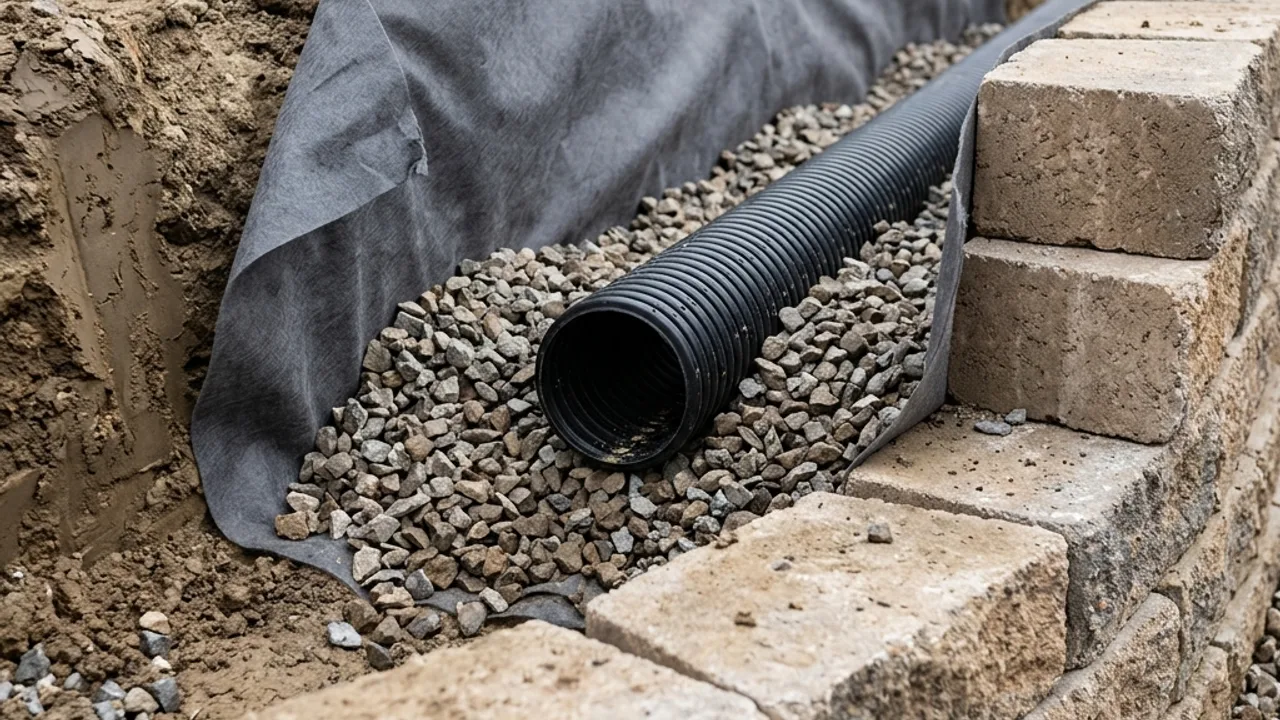
Ag-drain, gravel and geofabric drainage behind every wall - the structural detail that matters most through Perth's wet winters.

Retaining Walls Perth Wa: Who This Service Is For

Perth's climate is Mediterranean - a dry summer followed by a wet winter - and that pattern is exactly what turns an undrained retaining wall into a problem. This service covers the ag-drain, gravel and geofabric drainage system that should sit behind every retaining wall, plus stormwater connection so water does not pool at the base or push against the wall face after winter rain. It suits anyone building a new wall who wants it done properly the first time, and anyone with an older wall showing damp, bulging or staining who suspects drainage was never installed correctly. First contact starts with understanding what, if anything, is behind your existing wall. On a fresh build this work happens before the wall face goes up, not after, so it is worth confirming it is scoped into any quote from the outset.

What's Included

You might also see retaining wall drainage & subsoil systems listed as subsoil drainage or agi drain installation - different suppliers use different names for the same work. Whichever term your quotes use, this is what the job typically covers:

Agi pipe and gravel drainage

Perforated agricultural drainage pipe in free-draining gravel behind the wall base.

Geofabric filter installation

Geotextile fabric separating backfill soil from drainage gravel so the drain does not clog with fines.

Stormwater connection

A positive connection from the drain to approved stormwater, not just a soak point.

Weep hole and face drainage

Weep holes or drainage cells at the wall face for walls where a rear drain alone is not enough.

How It Works

From first enquiry to a finished wall, here is what to expect at each stage of a drainage project in Perth.

1

Enquire

Tell us about your drainage project and your Perth suburb so we understand the ground you are working with.

2

Site Assessment

A local contractor assesses your block for this specific job - grade, soil, access and anything relevant to drainage work.

3

Written Quote

A fixed-price written quote for the drainage work, covering scope, material and any drainage or permit steps identified.

4

Install

The contractor completes the drainage work to the agreed scope, with drainage and finishing included.

Why Use Our Network for Retaining Wall Drainage & Subsoil Systems

A few things worth knowing before you start comparing quotes for drainage work anywhere in the Perth metro area:

The Perth-specific reason it matters

A dry summer then a wet winter is exactly the pattern that saturates undrained backfill - we explain why, not just what.

Never treated as an optional extra

Drainage is priced and installed as structural, not as a line item to trim.

Assessed on existing walls too

If you already have a wall and suspect drainage was never done, we start there.

Common Questions About Retaining Wall Drainage & Subsoil Systems

Can I build a retaining wall myself or do I need a contractor?
Homeowners can often build small, low retaining walls themselves if they understand basic construction and drainage principles. For taller walls, those near boundaries, or walls supporting driveways or structures, a licensed contractor is usually recommended and may be required by council or insurer. Poorly built DIY walls that fail can create safety hazards and liability issues.
How much does a retaining wall cost in Perth?
Retaining walls in Perth typically range from about $250 to $700 per square metre installed, depending on the materials and site conditions. Timber sleeper walls are usually at the lower end, while concrete and natural stone are towards the higher end. Costs also vary with wall height, access, engineering, drainage and council approval requirements.
What type of retaining wall is best for Perth’s sandy soil?
Concrete sleeper and engineered block systems are often recommended for Perth’s sandy soils because they provide good strength and work well with free‑draining backfill. Limestone can also be suitable, especially in coastal areas, provided the wall is properly designed and drainage is managed. The choice should consider wall height, loading and local wind and water conditions.
How long does it take to build a retaining wall?
A straightforward residential retaining wall can often be built in a few days, depending on length, height and access. More complex projects that need excavation, engineering inspections, drainage and council sign‑off can take one to two weeks on site, plus additional time for approvals beforehand. Weather and site constraints around existing structures also affect timing.
What drainage do I need behind a retaining wall?
Most retaining walls require free‑draining backfill, such as gravel, together with agricultural (aggie) pipe at the base to carry water away. Geofabric is often used to keep fine soils out of the drainage layer, and weep holes or outlets help relieve pressure. Without proper drainage, water build‑up can significantly increase loads on the wall and risk failure.

Retaining Wall Drainage & Subsoil Systems across Perth

Pick your suburb for the local notes, or submit the form for a free review.

Retaining Wall Drainage & Subsoil Systems in Kalamunda Kalamunda extends across the Darling Scarp, where moderately steep to very steep slopes, shallow duplex soils… Retaining Wall Drainage & Subsoil Systems in Lesmurdie Lesmurdie straddles the Darling Scarp with steep hillsides, shallow yellow-brown duplex soils, granite… Retaining Wall Drainage & Subsoil Systems in Roleystone Roleystone is a leafy Perth Hills suburb on the Darling Scarp with undulating-to-steep terrain and… Retaining Wall Drainage & Subsoil Systems in Mundaring Mundaring sits in the Perth Hills beyond the Darling Scarp ascent, with undulating plateau terrain and… Retaining Wall Drainage & Subsoil Systems in Darlington Darlington occupies the Darling Scarp and is dissected by Nyaania Creek, creating sloping and valley-side… Retaining Wall Drainage & Subsoil Systems in Armadale Armadale spans the foothill edge of the Swan Coastal Plain near the Darling Scarp, with terrain transitioning… Retaining Wall Drainage & Subsoil Systems in Kelmscott Kelmscott sits at the base of the Darling Scarp and rises markedly to the east, with foothill sites crossing… Retaining Wall Drainage & Subsoil Systems in Byford Byford changes from steep Darling Range foothills in the east to relatively flat, seasonally waterlogged… Retaining Wall Drainage & Subsoil Systems in Forrestfield Forrestfield lies on the Swan Coastal Plain below the scarp, with mapped Forrestfield and Guildford soils and… Retaining Wall Drainage & Subsoil Systems in High Wycombe High Wycombe sits at the base of the Darling Scarp and ranges from about 14 to 117 metres elevation, so block… Retaining Wall Drainage & Subsoil Systems in Scarborough Scarborough is a coastal suburb whose foreshore comprises shore-parallel Quindalup sand ridges over older… Retaining Wall Drainage & Subsoil Systems in City Beach City Beach occupies a coastal dune landscape of Spearwood sands and Tamala limestone, so sandy excavation,… Retaining Wall Drainage & Subsoil Systems in Cottesloe Cottesloe lies on sandy Spearwood and Quindalup coastal landforms, with yellow-to-brown sand over limestone… Retaining Wall Drainage & Subsoil Systems in Mount Hawthorn Mount Hawthorn is an established inner suburb with elevations of roughly 9 to 62 metres, so individual blocks… Retaining Wall Drainage & Subsoil Systems in Leederville Leederville is a densely developed inner-city suburb centred on Oxford and Vincent Streets, where…

See all locations ->

Talk to a specialist

Ready to Talk About Your Retaining Wall Drainage & Subsoil Systems Project?

Tell us about your Perth property and a local contractor will be in touch.