
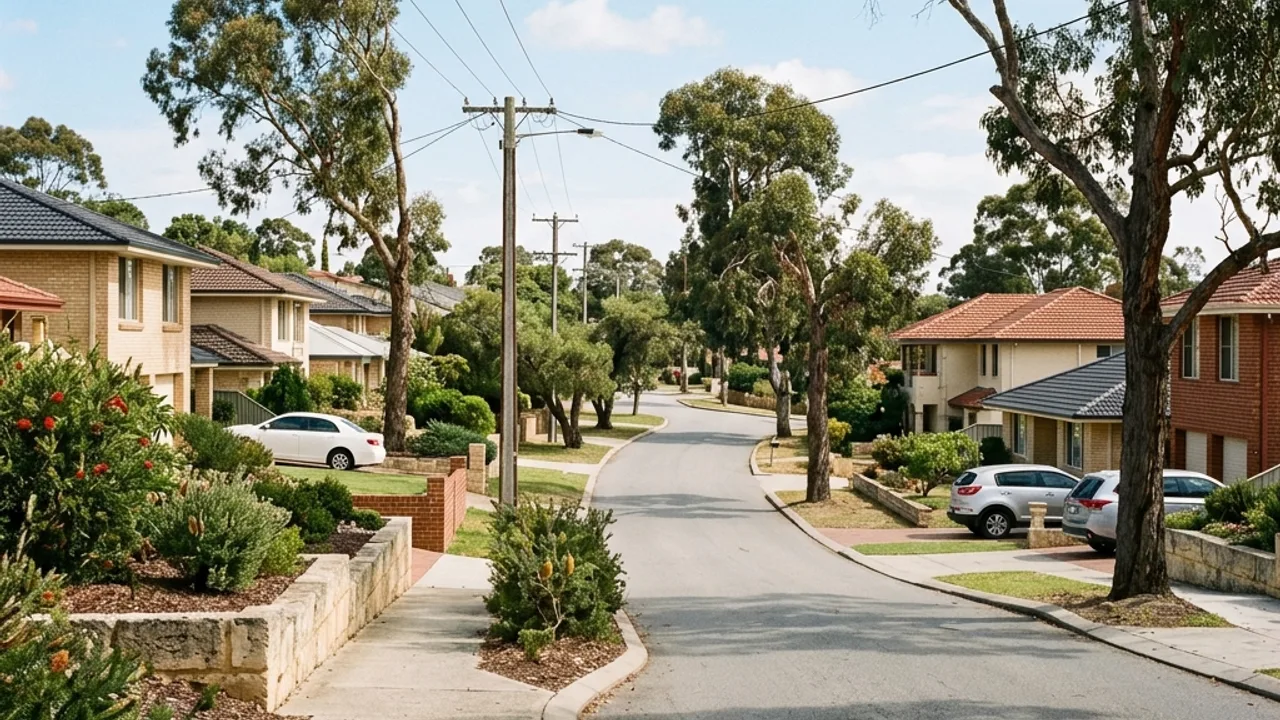
Retaining Walls in Mount Hawthorn
Mount Hawthorn is an established inner suburb with elevations of roughly 9 to 62 metres, so individual blocks can have meaningful level changes despite the urban setting.
Retaining walls Mount Hawthorn homeowners can rely on, matched to the ground your block actually sits on.
How Mount Hawthorn ground affects the retaining walls Perth homeowners build
Mount Hawthorn is an established inner suburb, but its elevation still ranges from roughly 9 to 62 metres, meaning individual properties can carry meaningful level change even in a built-up, urban setting. A retaining wall here is often about managing an existing level difference on an established block - a raised front garden, a stepped rear yard - rather than a fresh-subdivision job, and older retaining that has reached the end of its service life is a real, recurring job type in this suburb.
Why Mount Hawthorn Homeowners Use Our Help
Sand-belt geometry, not soil movement
On the coastal plain a wall is usually earning its keep by levelling a building pad or holding a sandy face stable, not resisting clay movement - we scope the job for that real problem, not an imported one. Relevant for blocks around Scarborough Beach Road and near Axford Park.
Limestone-depth awareness
Yellow sand over limestone is common on this part of the coast; we flag the excavation-cost risk of hitting rock early before you commit to a price, not after the digger arrives. Relevant for blocks around Oxford Street and near Menzies Park.
Established-garden sensitivity
Retaining work around mature gardens and established street trees is planned to protect root zones and existing landscaping, not just to get the wall in as fast as possible. Relevant for blocks around Kalgoorlie Street and near ANZAC Cottage.
About Mount Hawthorn
Mount Hawthorn centres on Axford Park and Menzies Park, with ANZAC Cottage a notable local landmark near Scarborough Beach Road and Oxford Street. The suburb is one of Perth's established inner-northern areas, with a mix of character housing and more recent infill development on standard-sized blocks.
Local Conditions on the Ground in Mount Hawthorn
Streets around Kalgoorlie Street and the older parts of Mount Hawthorn often have retaining walls original to the property's construction decades ago, now reaching an age where repair-versus-replace is the live question rather than a fresh installation. Established street trees and tighter side access on these older blocks also shape what retaining method and machinery access is realistic for a given job.
Retaining Wall Services Available in Mount Hawthorn
Talk to a specialist
Ready to Talk About Your Mount Hawthorn Project?
Tell us what is happening in Mount Hawthorn and we will help you take the next step.
Get a Written Quote for Mount Hawthorn
Your details help us understand what you need and respond clearly.
Adjacent Suburbs We Also Cover
Nearby neighbourhoods: Joondanna, Glendalough, Leederville