
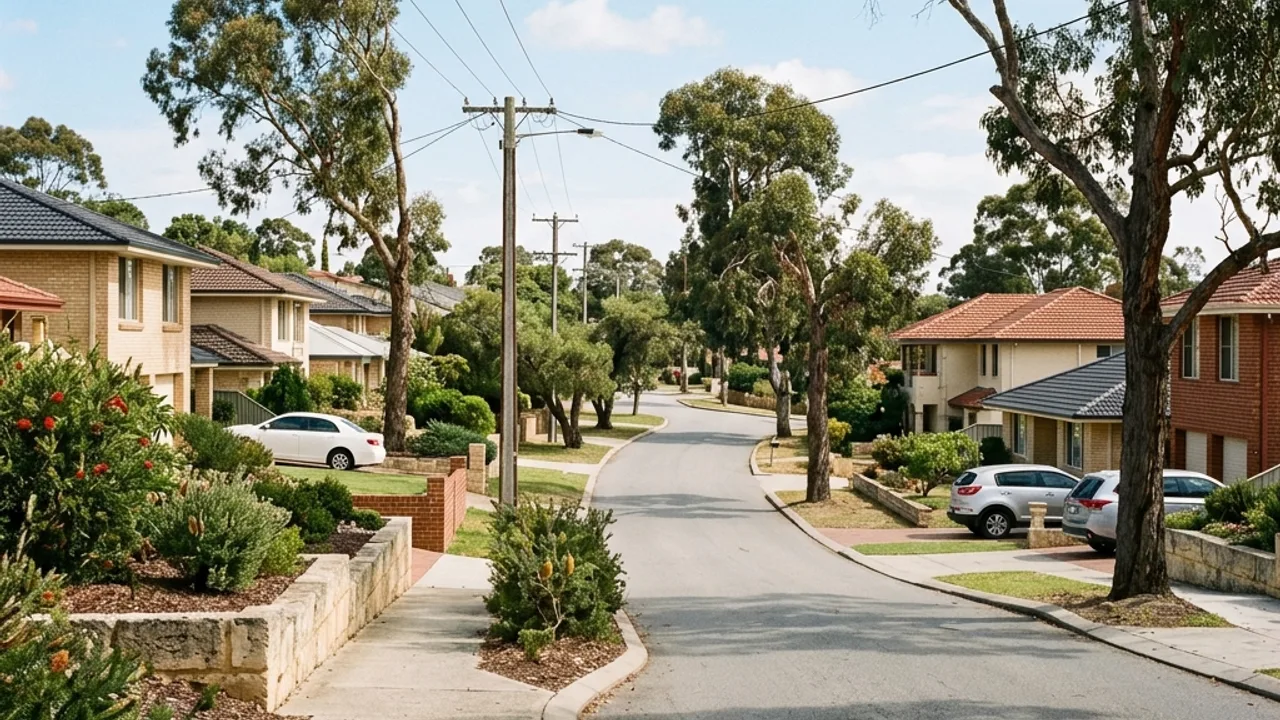
Retaining Walls in Darlington
Darlington occupies the Darling Scarp and is dissected by Nyaania Creek, creating sloping and valley-side sites where rock, runoff and retaining loads need lot-specific assessment.
Retaining walls Darlington homeowners can rely on, matched to the ground your block actually sits on.
How Darlington ground affects the retaining walls Perth homeowners build
Darlington sits on the Darling Scarp and is cut through by Nyaania Creek, which shapes how retaining walls get sited here - valley-side blocks need to manage both slope and watercourse-adjacent drainage. Rock excavation and runoff control are common considerations on Darlington sites, and a wall that crosses the WA 0.5 m threshold needs the same AS 4678 design and Certificate of Design Compliance path as any other engineered wall in the hills. Timber sleeper and rock walling both suit Darlington's bush-character blocks for lower garden terracing; taller structural retaining generally moves to post-and-panel or besser block.
Why Darlington Homeowners Use Our Help
We know Darling Scarp ground
Shallow soil over rock, granite outcrop and steep grade change how a wall is footed here - we scope for that on your specific block, not a flat-block assumption carried over from a coastal-plain job. Relevant for blocks around Darlington Road and near Darlington Hall.
Slope-aware quoting
Access on a hills block often means machinery limits and hand-dig sections on the steeper runs - priced upfront in the written quote, not added as a surprise variation later. Relevant for blocks around Pine Terrace and near Darlington Oval.
Drainage sized for the rainfall
Hills suburbs see materially higher winter rainfall than the coastal plain, so subsoil drainage behind the wall is scoped to that reality, not a generic Perth-wide assumption. Relevant for blocks around Owen Road and near Darlington Station Reserve.
About Darlington
Darlington is a Perth Hills village centred on Darlington Hall and Darlington Oval, with Darlington Station Reserve marking the old rail line through Pine Terrace and Owen Road. The suburb has a strong bush-village character, and many blocks sit on sloping, creek-adjacent land rather than a standard flat subdivision.
Local Conditions on the Ground in Darlington
Properties near Nyaania Creek and along Pine Terrace often need retaining design that accounts for watercourse proximity, where stormwater cannot simply be directed toward the creek without proper connection and erosion control. Darlington's tree-canopy character and heritage-village feel also mean access for excavation machinery can be tighter than a standard suburban street, which affects both timeline and the practical wall-building method chosen.
Retaining Wall Services Available in Darlington
Talk to a specialist
Ready to Talk About Your Darlington Project?
Tell us what is happening in Darlington and we will help you take the next step.
Get a Written Quote for Darlington
Your details help us understand what you need and respond clearly.
Adjacent Suburbs We Also Cover
Nearby neighbourhoods: Boya, Glen Forrest, Helena Valley